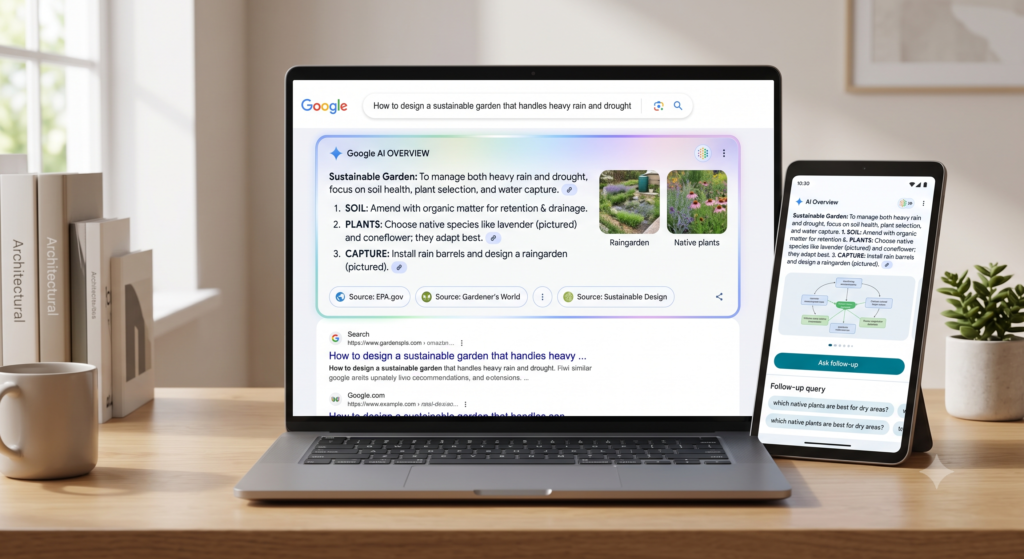

You search for something on Google. An AI-generated answer appears before the usual list of links. You get what you need without opening a single website.
That small change is reshaping digital marketing.
People are still searching, but the way they discover information is changing. AI can now summarize results, answer questions, compare options, and point users toward the sources it considers useful.
For brands, that creates a new challenge: being visible isn’t just about ranking on Google anymore. You also need to be discoverable when AI systems decide which information to surface. And that’s changing how marketers think about SEO, content, data, advertising, and even brand visibility.
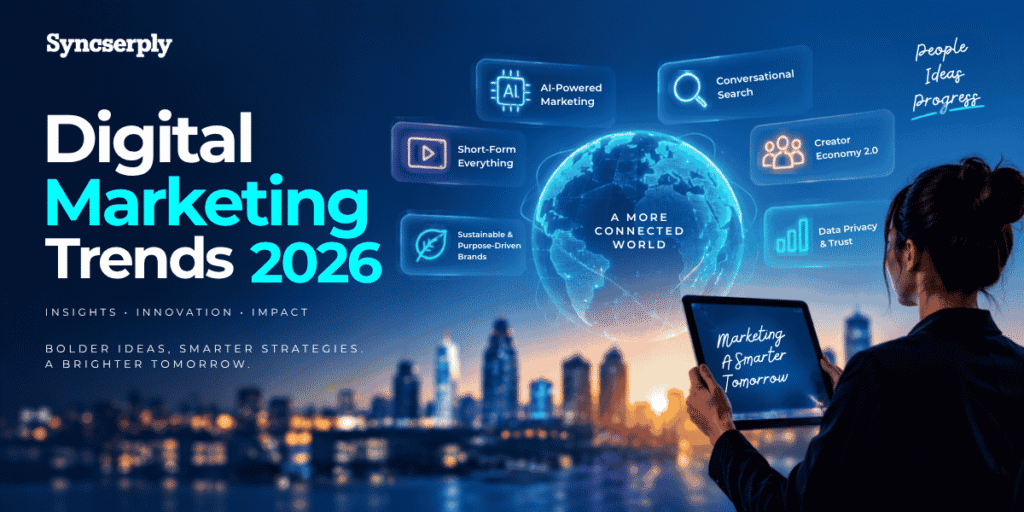
In this article, we’ll break down the biggest digital marketing trends shaping 2026, what they mean for marketers, and where these shifts could take digital marketing next.
Key Digital Marketing Trends to Watch in 2026
1: AI Search Becomes the New Front Door to Every Brand
AI Search is transforming not only how people find information but also how they are looking for it. AI-powered search interprets queries, retrieves information from credible and authoritative sources, and generates a response.
Brand and content marketers must adopt a strategy to build content that is clear, organized, and accessible across formats.
To optimize your brand for AI-powered search, create pages that:
- Have a clear structure, context, and precise information.
- Use a conversational voice without ambiguity.
- Feature natural language in body and headings.
2: AI Is Taking Over More Marketing Tasks
AI and Automation are no longer in the experimental tech phase. They are now handling more of the repetitive work behind everyday marketing.
Here are some of the most widely adopted AI applications across the marketing workflow:
- Predictive Email Sequencing: AI analyzes subscriber behavior to decide which emails to send, when to send them, and how to personalize them.
- Automated Programmatic Ad Bidding: AI analyzes campaign data in real time and adjusts PPC bids to improve performance while reducing wasted ad spend.
- Instant, Multi-Source Reporting: AI pulls data from social media, analytics, and CRM platforms, then turns it into clear performance insights.
- Rapid First-Draft Generation: Generative AI creates first drafts for blogs, social posts, emails, and ad copy, cutting down the time spent starting from scratch.
- Dynamic Creative Optimization: AI tests different headlines, visuals, and CTAs to identify which combinations perform best with different audiences.
3: Hyper-Personalization and the Rise of Customer Data Platforms (CDPs)
McKinsey found that 71% of consumers expect personalized interactions. And AI is making that personalization possible at a much larger scale. In fact, we are moving towards AI-personalization.
Personalization in digital marketing is being shaped by three big shifts:
- AI can tailor customer interactions based on real-time behavior.
- First-party data is becoming more important as third-party tracking declines.
- Agentic AI can make personalized decisions and act on them automatically.
All three shifts depend on one thing: having customer data in one place. A Customer Data Platform (CDP) brings together web, app, email, purchase, and service data to create one up-to-date customer profile.
4: Short-Form Video Is Still Winning
Short-form video continues to dominate because it gives brands a fast way to grab attention, explain an idea, and drive action.
Interactive and shoppable features are turning short-form videos into places where people can discover and buy products.
Here are the formats driving this shift:
- Instagram Reels: Product tags let viewers discover and shop products directly from Reels.
- YouTube Shorts: Product links connect viewers to products and shopping pages while they watch.
- TikTok Shop & LIVE: Viewers can tap pinned products or the shopping cart and buy without leaving the experience.
- Shoppable Video Ads: Google and Meta let brands add product catalogs to video ads, so viewers can browse while watching.
- Interactive Stories: Polls, quizzes, and links turn viewer engagement into clicks to specific landing pages.
5: Social Commerce Goes Mainstream
You see a product on TikTok or Instagram. You can discover it, check the product details, and buy it without leaving the app.
This is changing how brands sell on social media. TikTok Shop, Instagram product tags, and creator-led storefronts are turning social feeds into shopping spaces.
Brands are also using niche creators, culture-led content, and interactive formats to make social shopping feel more like content and less like a traditional ad.
6: Authenticity and Community Beat “AI Slop”
AI can now create almost everything marketers need. But how many times have you seen something and instantly thought, “This is AI”? Once you notice it, the content can feel less real.
Brands are responding by putting the human touch back into their marketing. Etsy and TD Bank have highlighted human creativity, while Polaroid has encouraged people to step away from screens and reconnect with real-life experiences.
Apple and Coinbase have also used behind-the-scenes content to show the real people and craft behind their campaigns.
Source: Marketing Brew
Trends-At-A-Glance
| Trend | What to do |
|---|---|
| AI Search | Structure key content around clear questions and direct answers |
| AI & Automation | Start with one repetitive task that takes time every week |
| Personalization | Collect useful first-party data at key customer touchpoints |
| Short-Form Video | Add product tags, links, or interactive elements where relevant |
| Social Commerce | Test selling through the platforms your audience already uses |
| Authenticity | Show real people, processes, customers, or work behind the brand |
How to Actually Prepare for These Trends
In 2026, marketers need to work with AI, capture leads where people already spend time like, social media platforms, and build first-party data they actually own.
1. Build AI into the workflow
Use AI for repetitive work like research, first drafts, reporting, and campaign optimization. At the same time, make your content clear, structured, and easy for AI-powered search to understand. For a broader marketing plan, start with our guide to building a digital marketing strategy.
2. Capture attention where it happens
Don’t make every social interaction end with a click to your website. Use native lead forms, product features, and automated DMs to turn attention into action while people are still on the platform.
3. Build what AI can’t fake
Use real customer experiences, original ideas, behind-the-scenes content, and communities to give your brand a human edge. At the same time, collect first-party data through direct interactions so you aren’t entirely dependent on platforms you don’t control.
Beyond the Current Trends
Digital marketing changes as consumer behaviour changes. The platforms people use to discover, research, and buy keep shifting, so your strategy needs to shift with them.
Reddit and Pinterest, for example, can be valuable sources of discovery and leads depending on your audience. Small teams can also use AI tools like ChatGPT and Claude, along with plugins and connectors that connect them to tools for research, analytics, content, and workflow automation.
Frequently Asked Questions
Key Takeaways
- The real shift in 2026 isn’t any single trend. It’s the growing importance of what you control: your content, your customer data, and your relationship with your audience.
- AI is taking over more repetitive marketing work. What’s left is judgment, creativity, and decisions that still need human input.
- Across these trends, the same shift keeps appearing: meet people where they already are, and make it easier for them to discover, trust, and act on your brand.
- Start with one automated workflow, one first-party data habit, and one piece of genuinely human content. That’s enough to begin.